A renovation budget often starts with one number: the contractor quotation. But the amount you actually spend can be higher if important packages sit outside that figure or appear only after the existing villa is opened up.
The goal is not to assume every project will overrun. It is to understand the cost categories that are commonly forgotten so you can ask the right questions before signing.
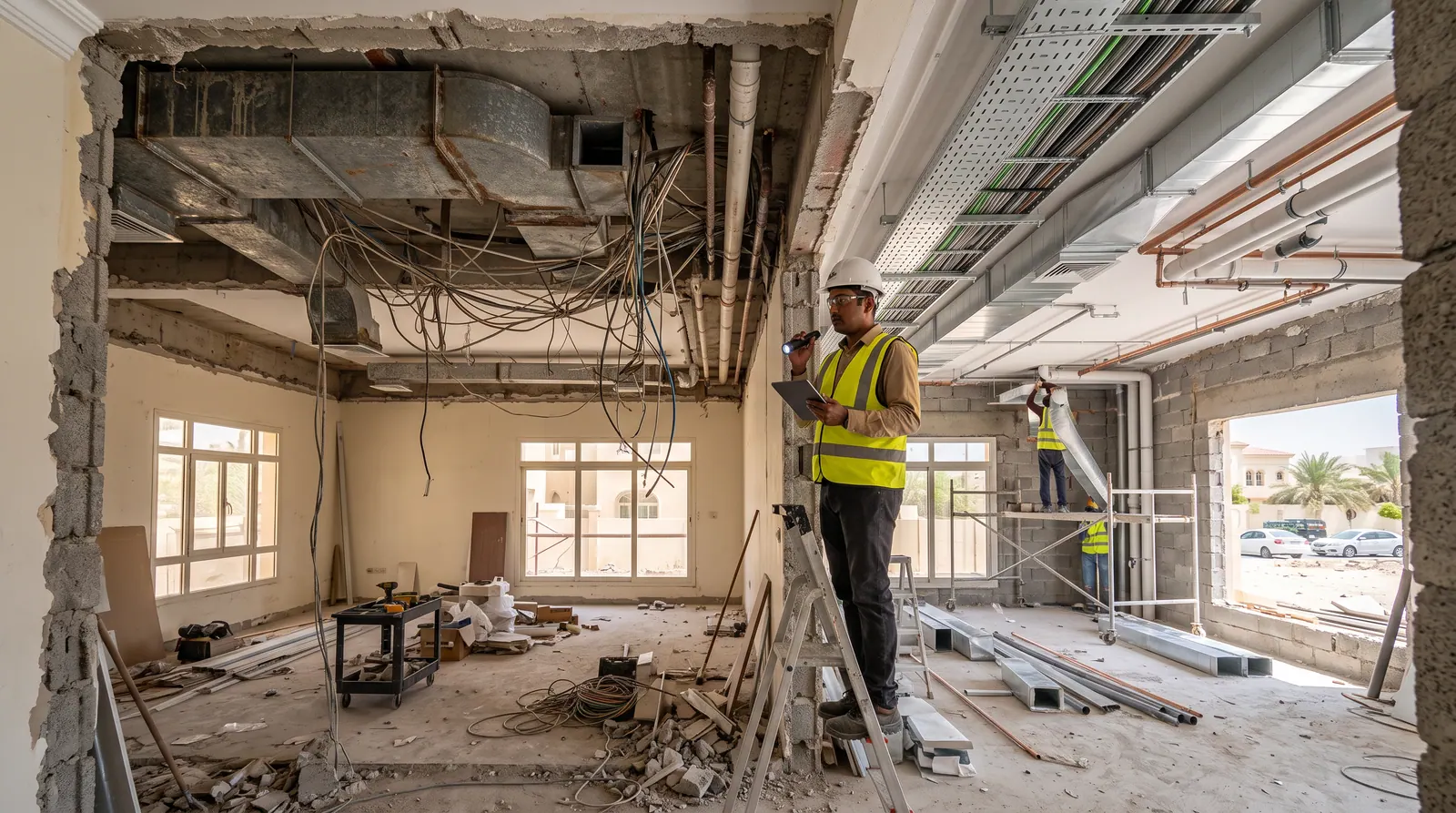
1. Existing MEP Systems That Cannot Be Reused
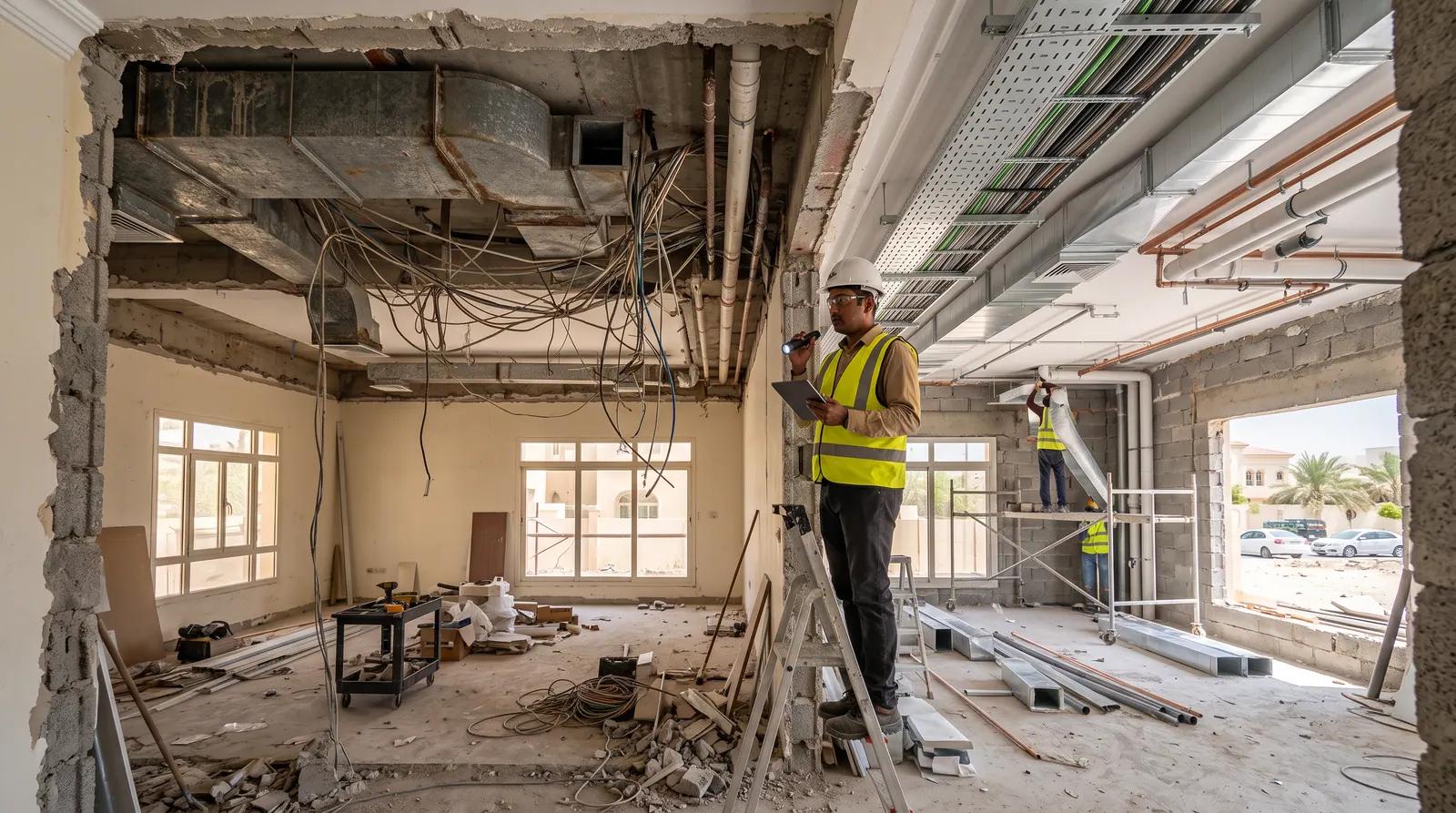
An early quotation may assume that the existing AC, electrical wiring, plumbing or drainage can be retained. Once ceilings and walls are opened, the condition may be worse than expected or the new design may demand more capacity.
This can turn a “modification” into a much larger replacement package.
2. Structural Strengthening
Homeowners often budget for removing a wall but not for what replaces it. Large openings, staircase changes, façade openings and extensions can require new steel or reinforced-concrete elements, temporary support and sometimes foundation work.
3. Authority, Community and Consultant Costs
Depending on the villa, the project may involve design submissions, permits, NOCs, inspections, drawings and consultant coordination. These costs vary by jurisdiction and community and should be separated clearly from the construction contract.
Dubai Municipality publishes building permit procedures for residential villas, and DDA has separate building modification design/permit services for properties under its jurisdiction.
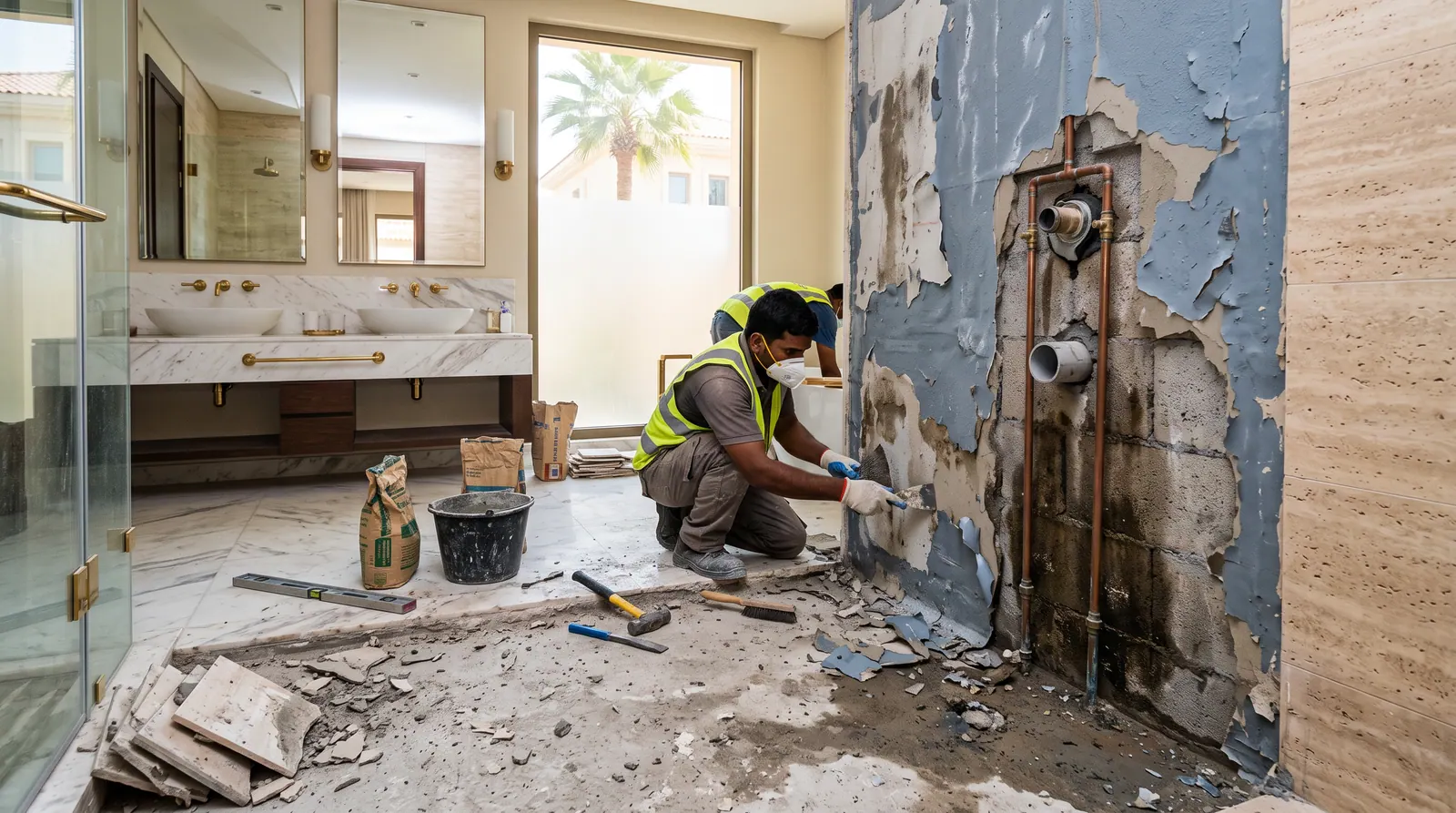
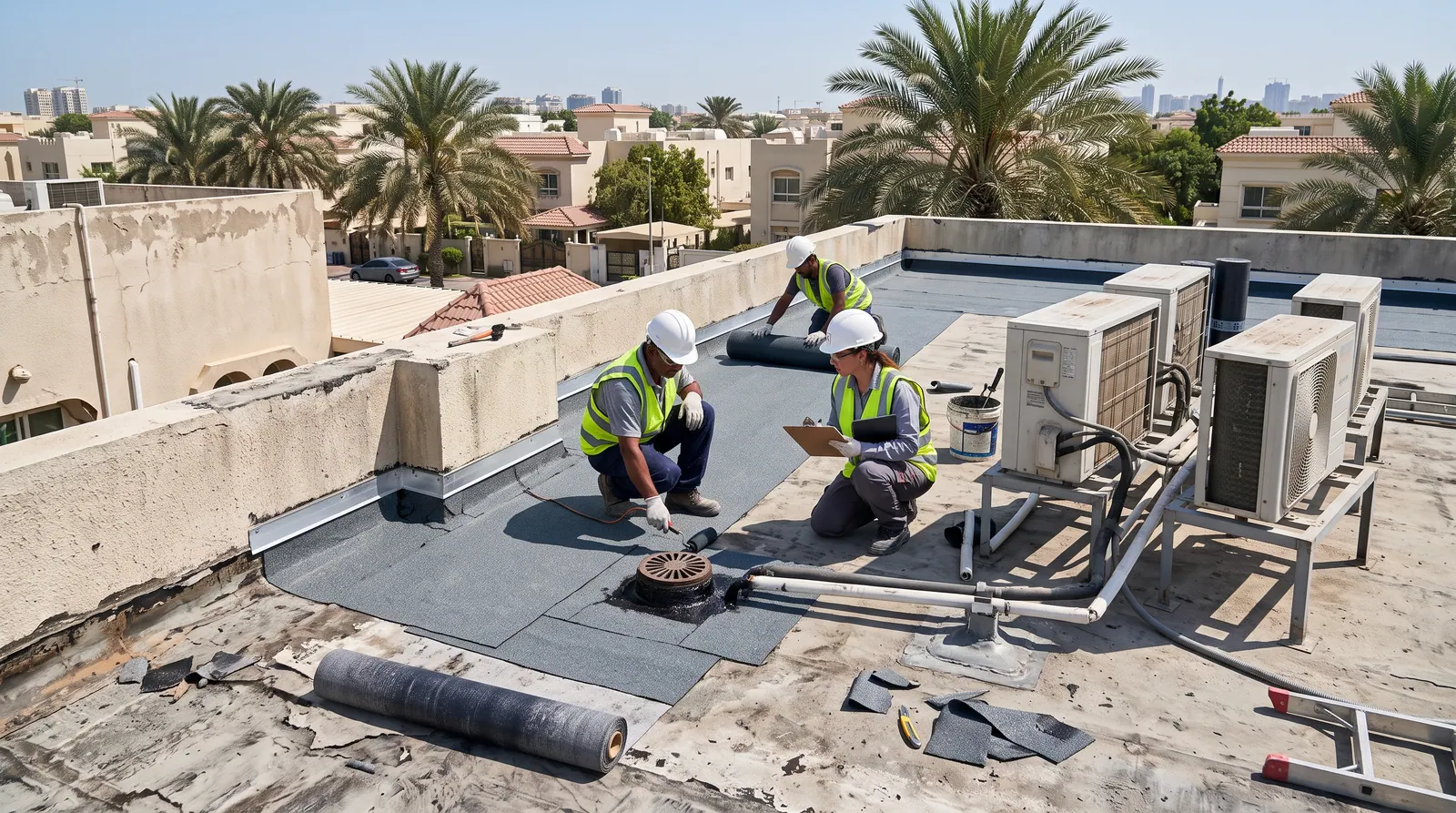
4. Waterproofing Repairs
Bathrooms, roofs, balconies and pools can hide expensive problems. If water damage is found, simply replacing the visible finish is rarely the right solution. The failed waterproofing system and affected substrate may need repair first.
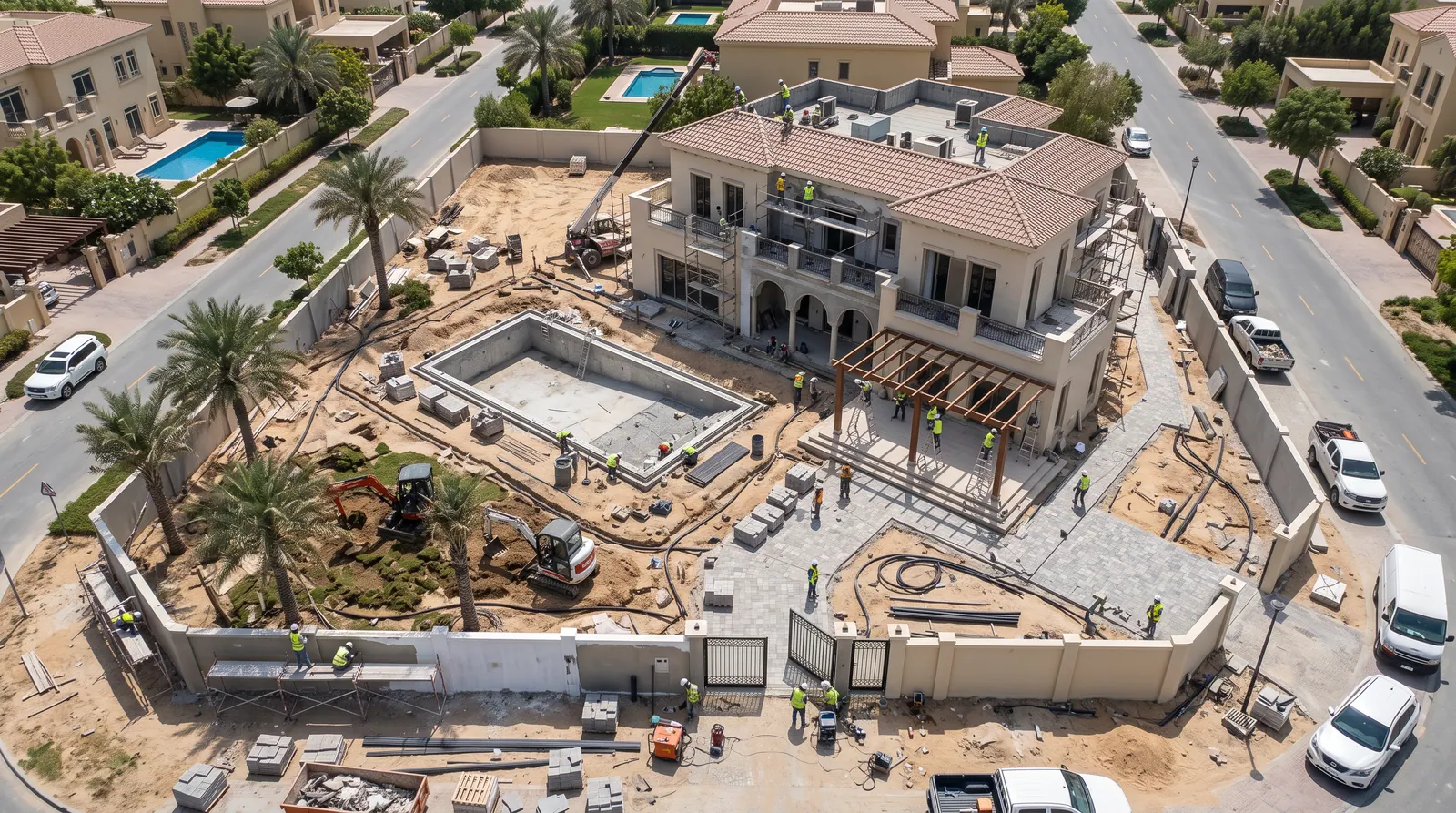
5. External Works
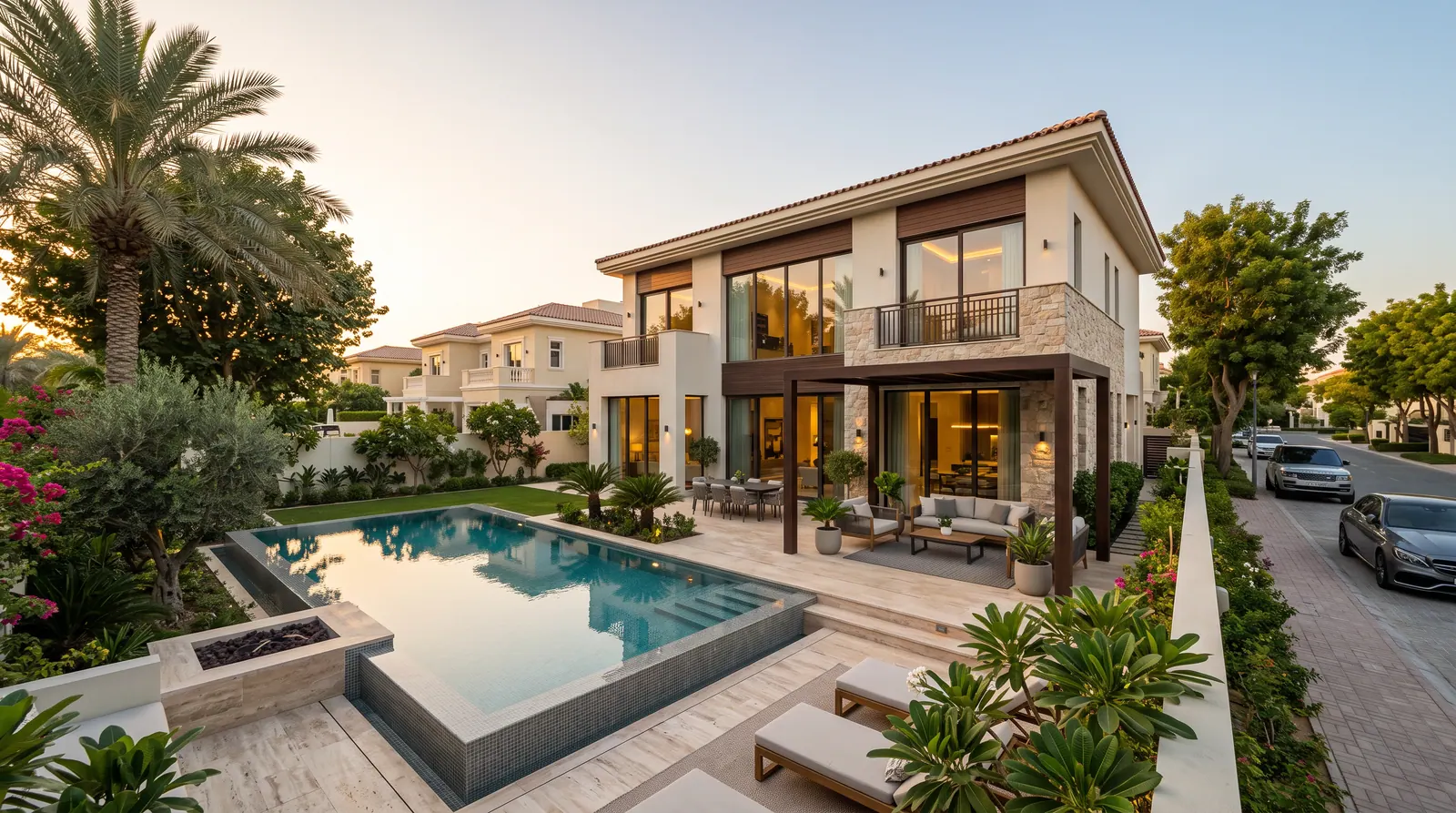
It is easy to budget the house and forget the plot. Landscaping, irrigation, pool works, paving, drainage, gates, pergolas, boundary walls and external lighting can become a major package on a villa renovation.
6. Material Upgrades and Client Selections
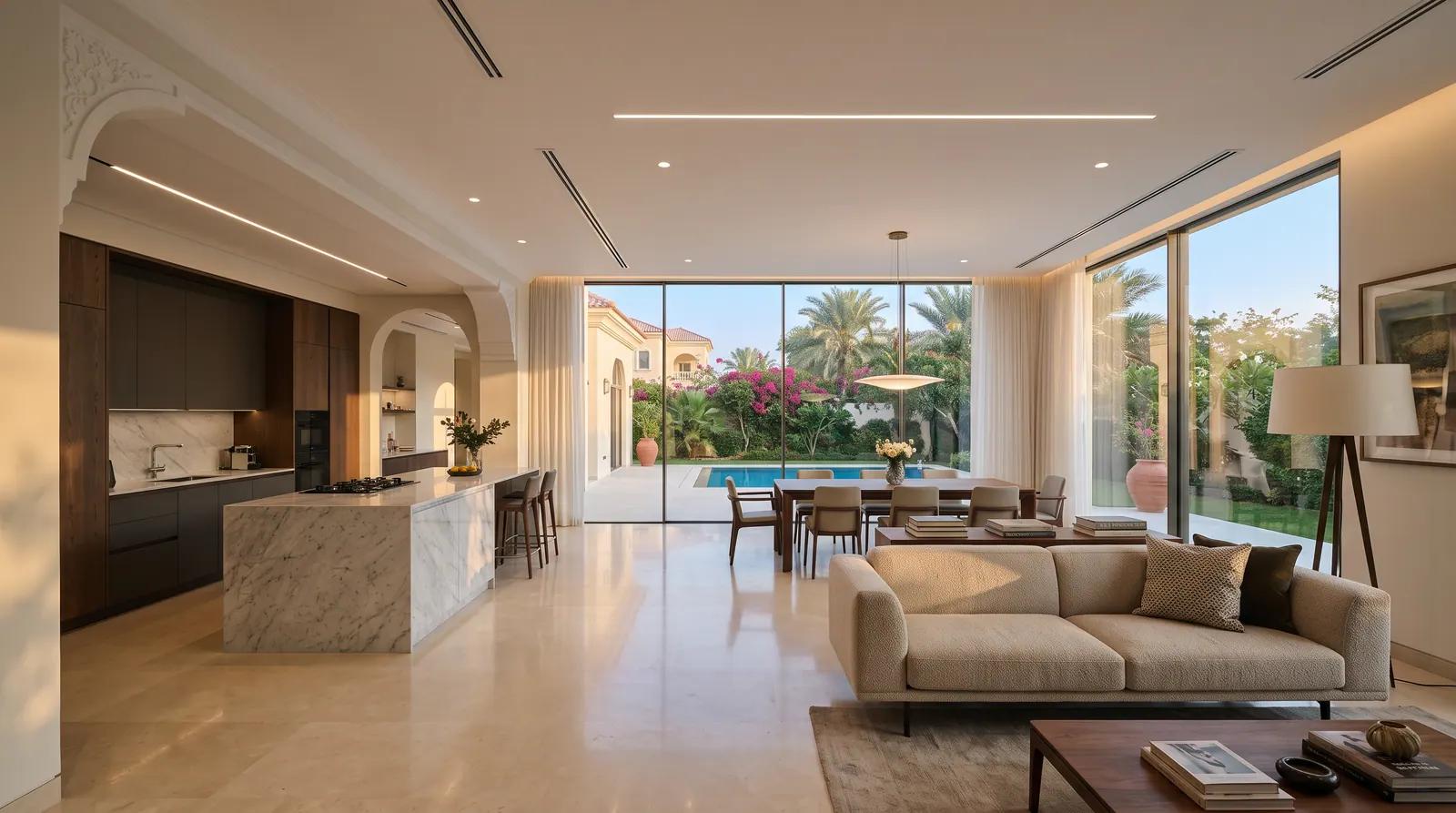
A quotation may contain reasonable allowances, but final selections can exceed them. This is common with stone, tiles, sanitaryware, lighting, appliances, doors, ironmongery and bespoke joinery.
The issue is not choosing premium materials. It is choosing them without knowing how far they sit above the contract allowance.
7. Variations After Construction Starts
Changing the kitchen, relocating a bathroom, modifying ceiling designs or adding smart-home features after related work is already installed creates additional cost because completed work may need to be removed and redone.
What About Temporary and Practical Costs?
Depending on your situation, also consider temporary accommodation, storage, moving, specialist surveys, temporary utilities, cleaning, security and protecting items that remain in the villa.

How to Protect the Budget
Ask for a detailed list of inclusions and exclusions.
Separate construction cost from consultant/authority/community costs.
Review all material allowances before signing.
Identify provisional sums.
Survey the condition of major MEP systems.
Resolve major structural changes during design.
Keep a contingency for genuine unforeseen conditions.
Require written variation prices before approving changes.
A Simple Budget Rule
Do not ask only “What is included?” Also ask “What will I still need to pay for outside this quotation?”
A Clearer Budget Creates Better Decisions
When the full project cost is visible early, you can decide where to spend more and where to simplify without disrupting construction. Hidden costs become most painful when they appear after the owner has already committed the entire budget.
At Nathan Engineering, we recommend developing the project scope and technical requirements before tender so the renovation budget reflects more than finishes alone.