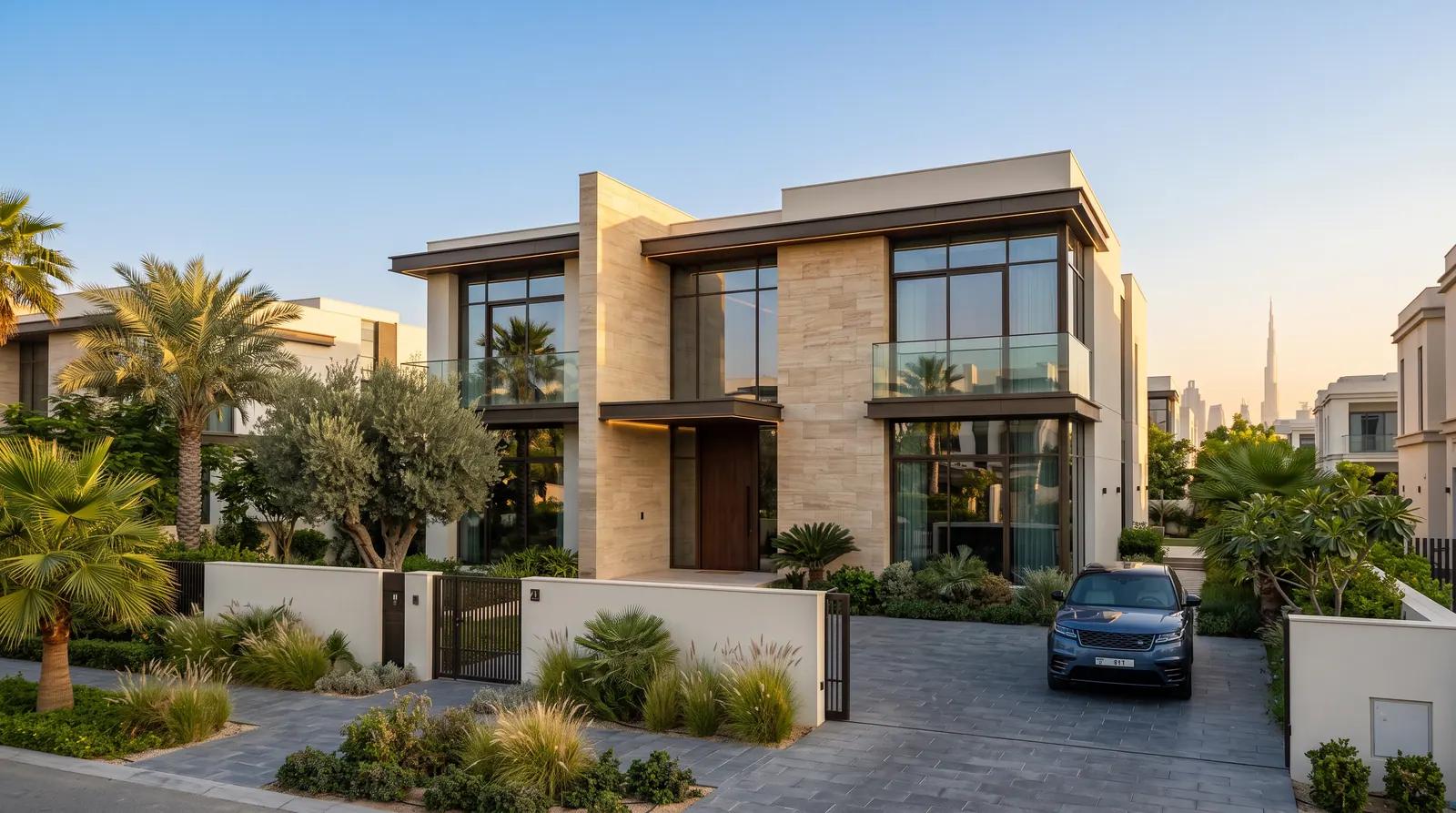
The first question most homeowners ask when planning a villa renovation in Dubai is simple: how much will it cost? The difficult part is that there is no single price per square foot that can accurately describe every project.
A villa that needs new flooring, paint and bathrooms is a completely different project from a villa that is being stripped back, structurally modified, rewired, replumbed and fitted with a new AC system. Community requirements, the age of the property, the quality of finishes and the amount of external work can all change the final budget.
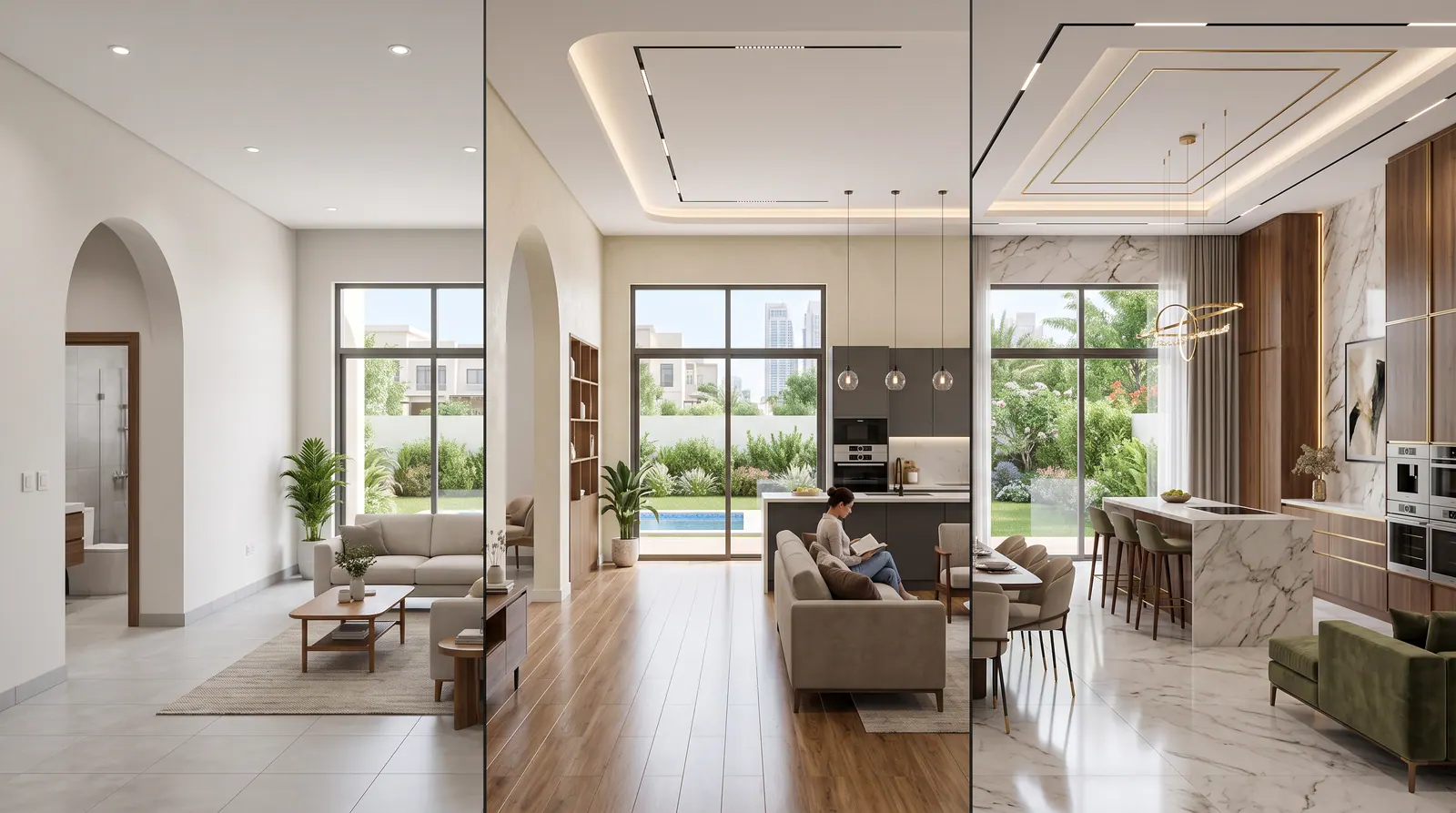
For early planning in 2026, several Dubai renovation firms are publishing broad market ranges around AED 150-300 per sq ft for cosmetic work, AED 350-600 per sq ft for a fuller mid-range renovation, and AED 600-1,200+ per sq ft for premium or luxury work. These are market guides, not official rates. Your actual project should be priced from drawings, a defined scope and an assessment of the existing villa.
Start With the Scope, Not the Square-Foot Rate
Cost per square foot is useful as a first filter, but it can be misleading when used on its own. The same 5,000 sq ft villa can have very different budgets depending on what is being changed.
| Renovation level | Typical scope | Indicative 2026 planning range |
|---|---|---|
| Cosmetic refresh | Paint, selected flooring, sanitary fittings, light kitchen/bathroom updates | Approx. AED 150-300 / sq ft |
| Full mid-range renovation | Kitchen, bathrooms, flooring, ceilings, joinery, significant MEP works | Approx. AED 350-600 / sq ft |
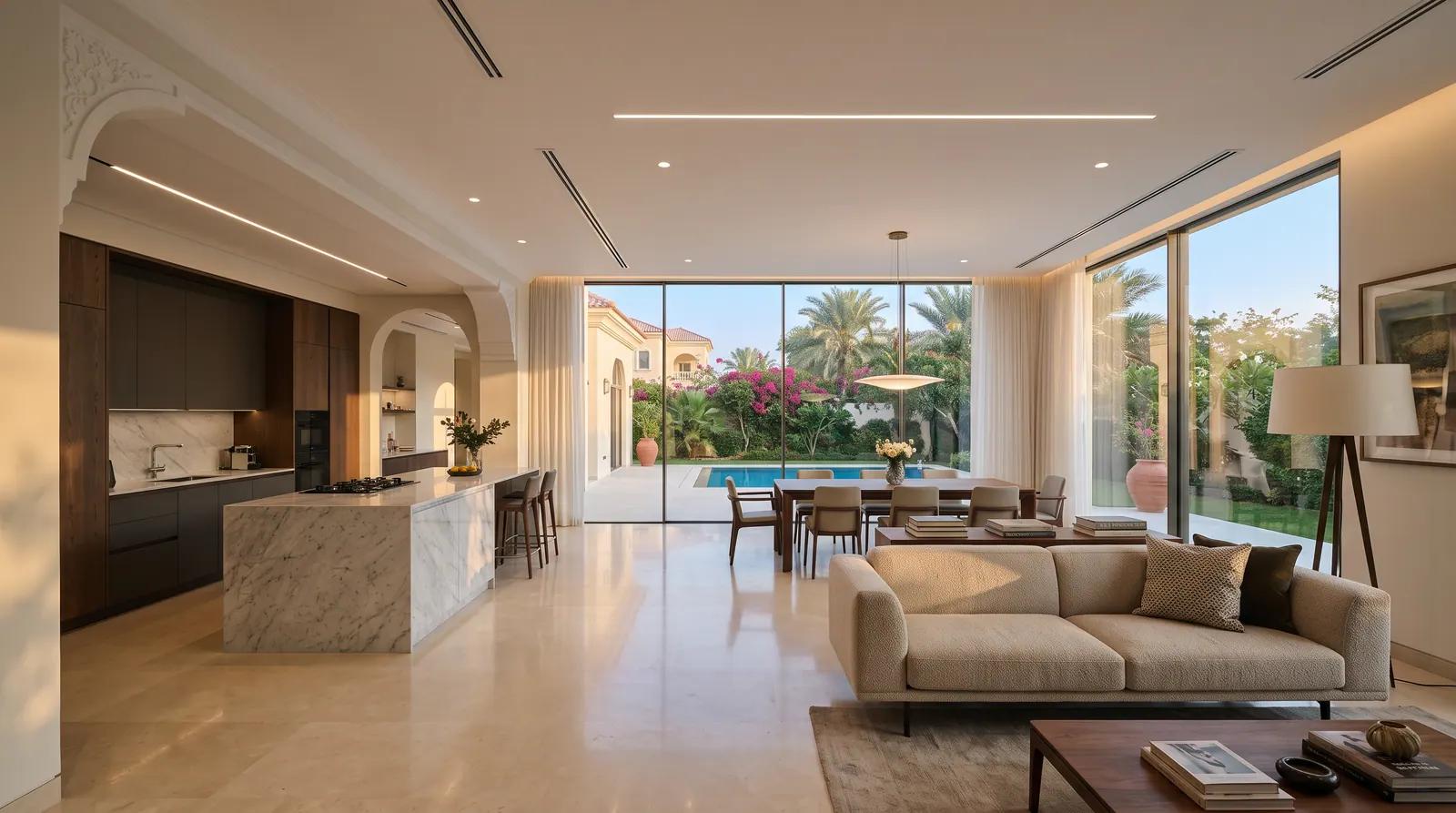
| Premium / luxury renovation | High-end finishes, bespoke joinery, major MEP, smart systems, structural changes | Approx. AED 600-1,200+ / sq ft |
Important
These figures are indicative market benchmarks gathered from 2026 Dubai renovation guides. They are not a quotation and they are not published authority rates.
What Actually Makes Up the Budget?
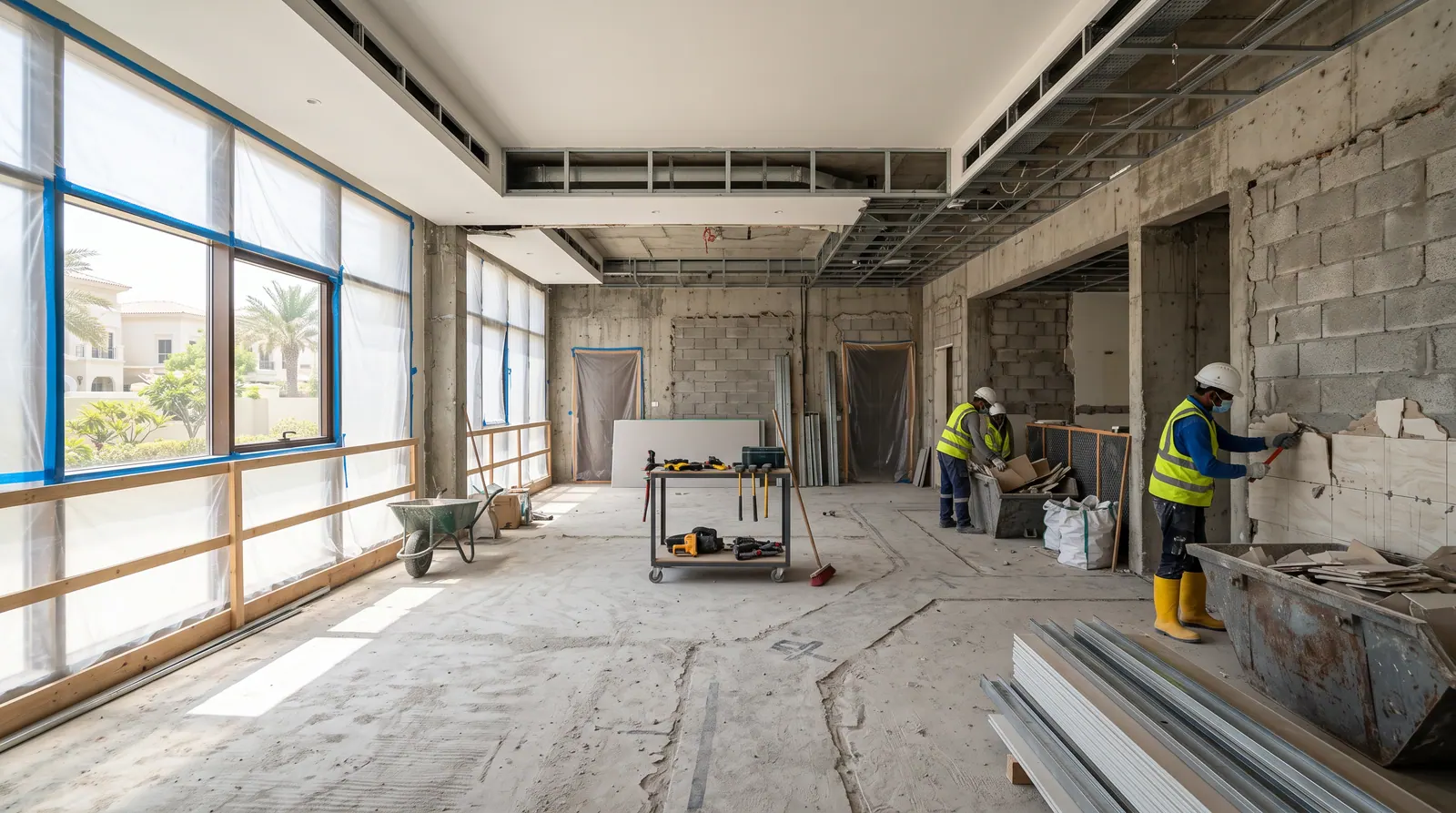
1. Demolition and Strip-Out
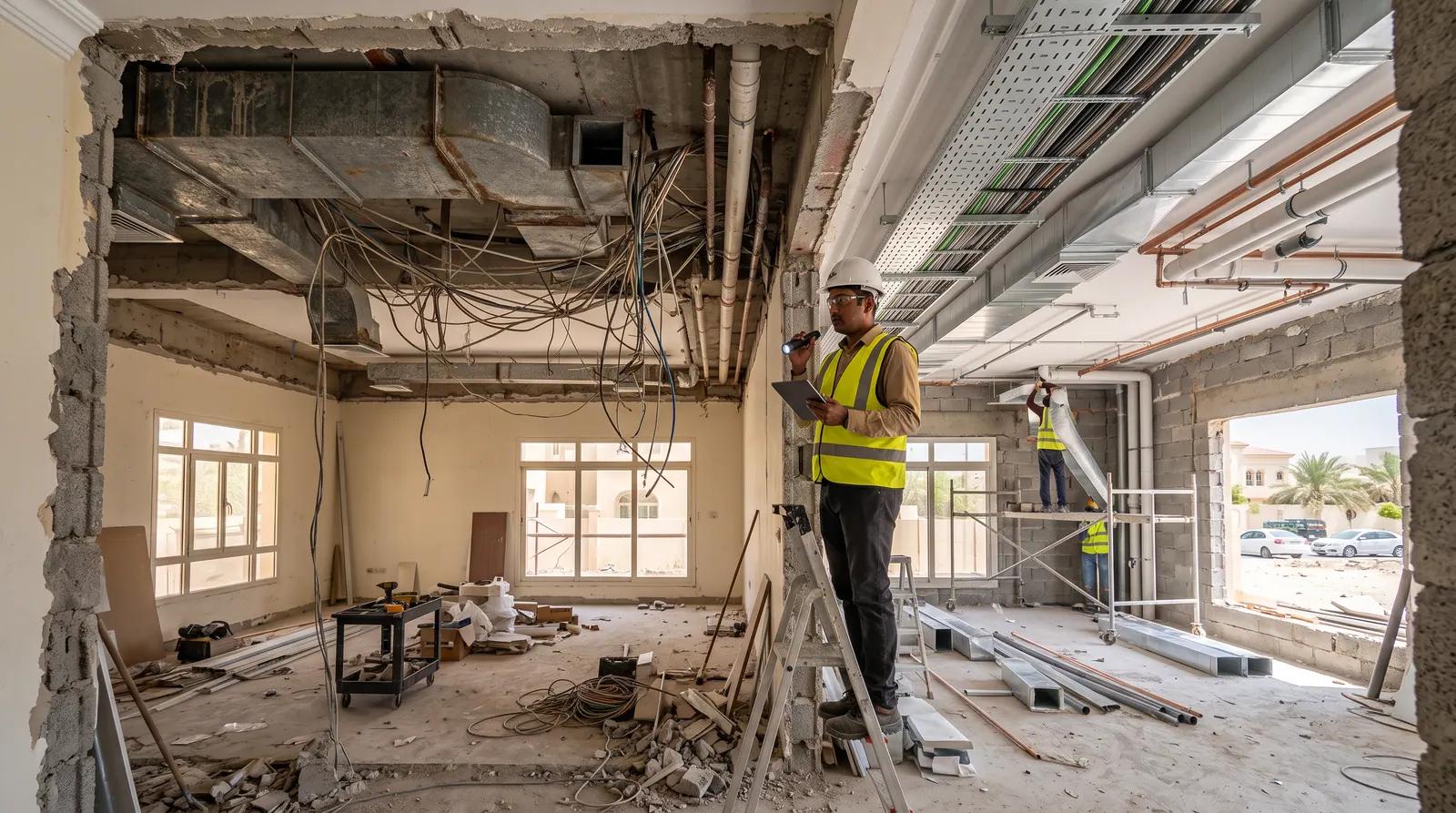
The cost is not only removing finishes. Proper strip-out may include protection, temporary works, disconnection of services, demolition, sorting and removal of waste, and making areas safe for the next stage.
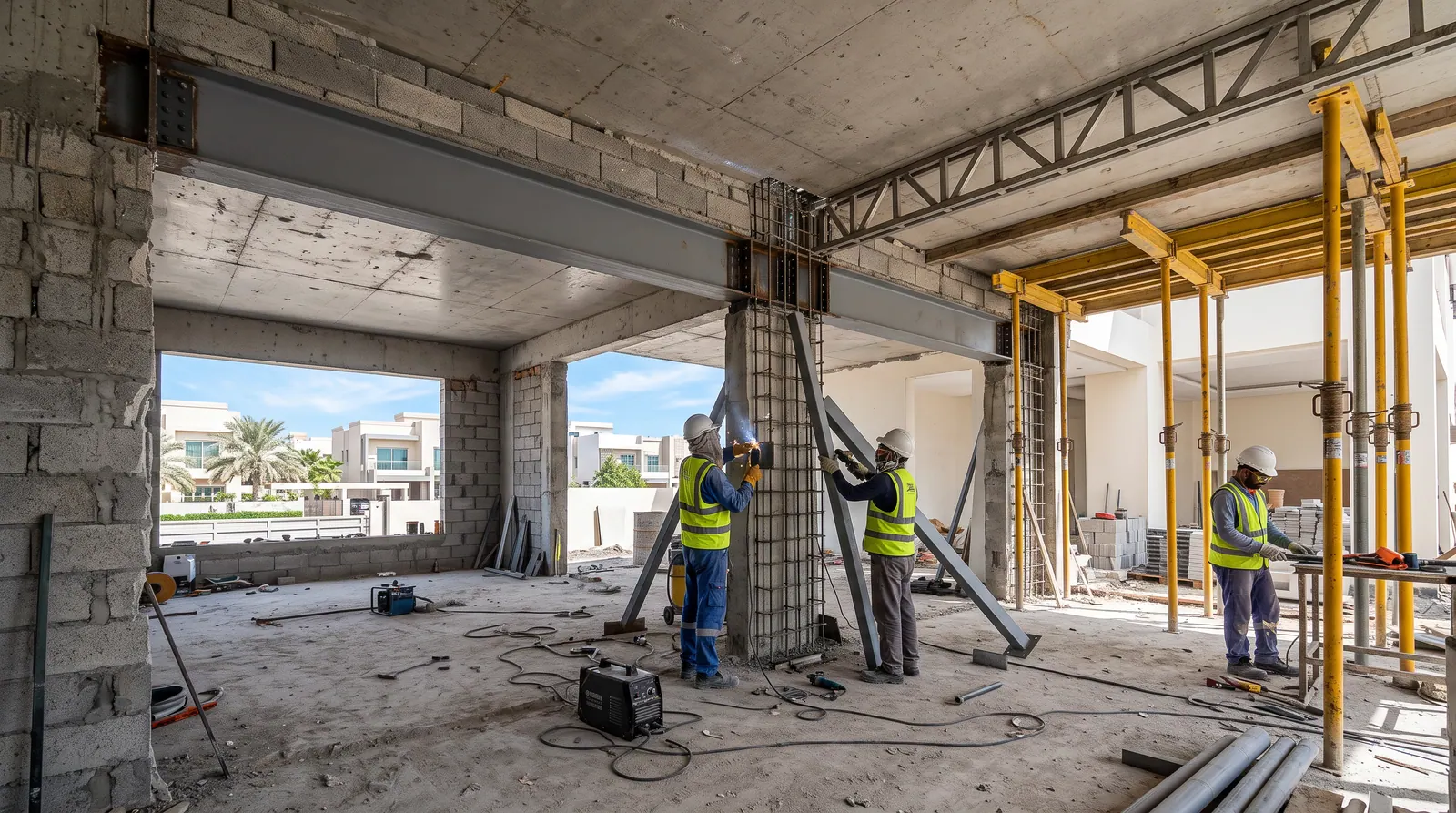
2. Structural Work
Opening up living spaces, changing staircases, enlarging windows or doors, building extensions and modifying slabs or beams can add significant cost. Structural strengthening is one reason two visually similar renovations can have very different budgets.
3. MEP Upgrades
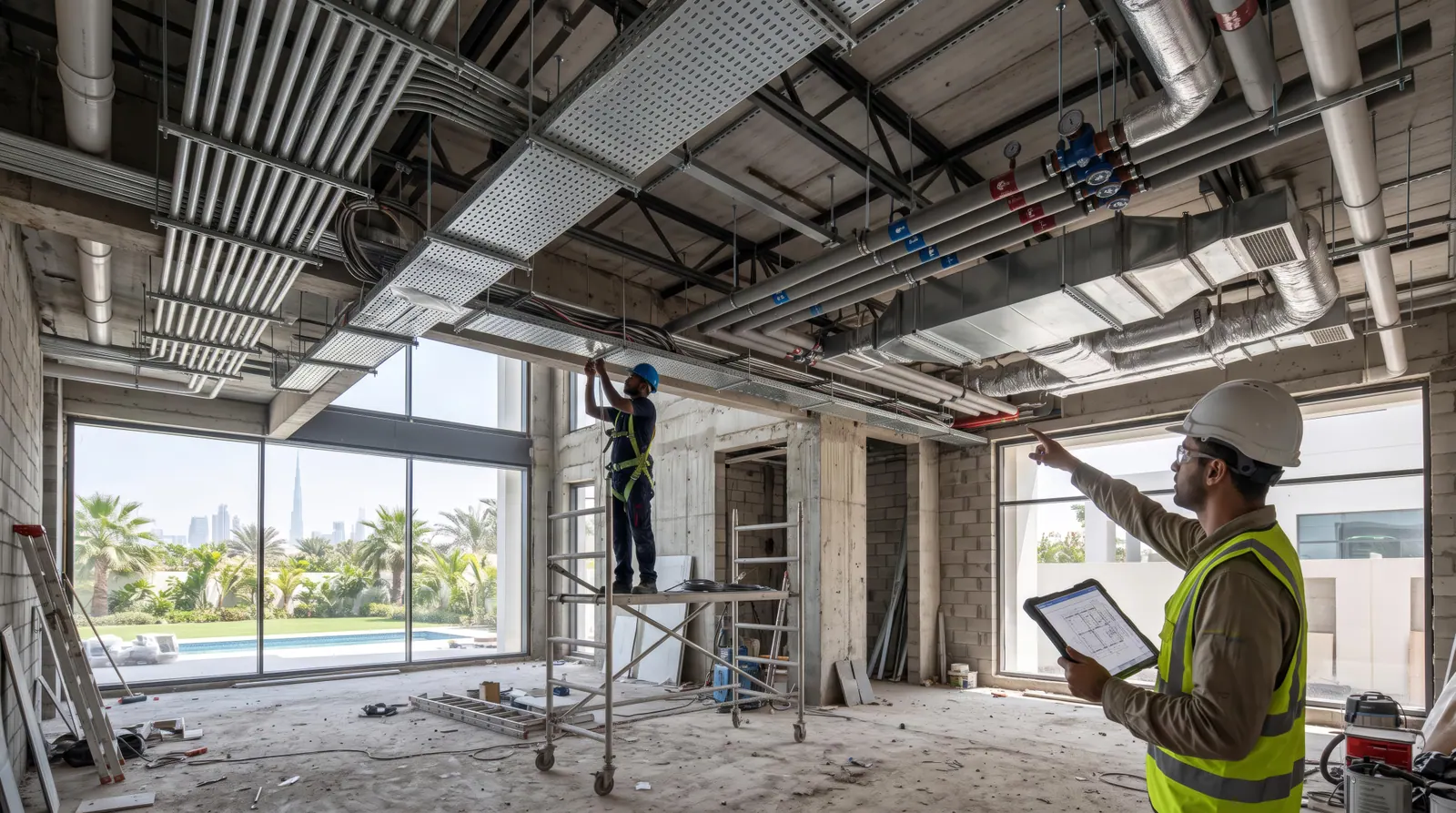
Mechanical, electrical and plumbing works are often underestimated because much of the work is hidden. A major renovation may require new AC equipment or ductwork, upgraded distribution boards, rewiring, plumbing, drainage, pumps, water tanks and controls.
4. Kitchens, Bathrooms and Joinery
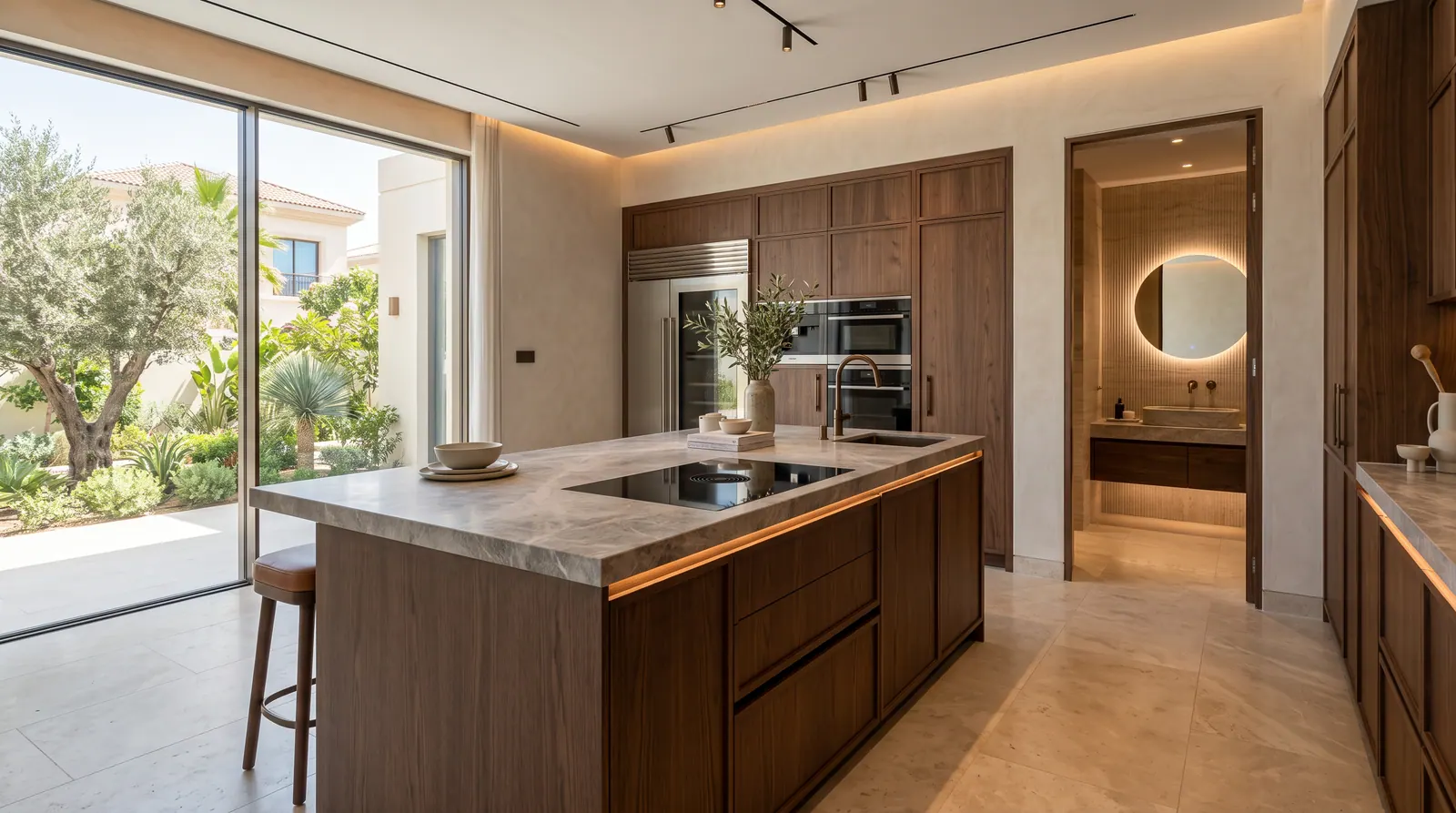
These areas tend to have a high cost per square metre because several trades are concentrated in a small space: waterproofing, plumbing, electrical work, stone or tile, sanitaryware, cabinetry and appliances.
5. Windows, Façade and Building Envelope
Replacing glazing, upgrading doors, changing the façade, repairing waterproofing or improving insulation can be a substantial package, especially on older villas.
6. Pool, Landscaping and External Works
A renovation budget can rise quickly when the external scope includes a swimming pool, new paving, landscaping, irrigation, pergolas, outdoor kitchens, boundary walls, lighting and driveway work.
Why a AED 500,000 Budget Can Become AED 800,000
Budget increases usually come from a combination of scope growth and hidden conditions. The most common causes include:
Adding rooms or extensions after the original price is agreed
Changing finish specifications during construction
Discovering that AC, electrical or plumbing systems need more replacement than expected
Structural strengthening that was not included in an early budget
Pool and landscaping packages being added late
Long-lead imported materials or bespoke joinery
Provisional sums being treated as fixed prices
Client variations after work has already been completed
How Much Contingency Should You Keep?
For an existing villa, it is sensible to maintain a contingency rather than committing the entire available budget to the original contract value. The appropriate amount depends on how much of the existing building has been investigated and how complex the renovation is.
Older villas with limited drawings, unknown previous modifications or ageing services generally carry more uncertainty than relatively new properties with a clear scope.
How to Get a More Reliable Price
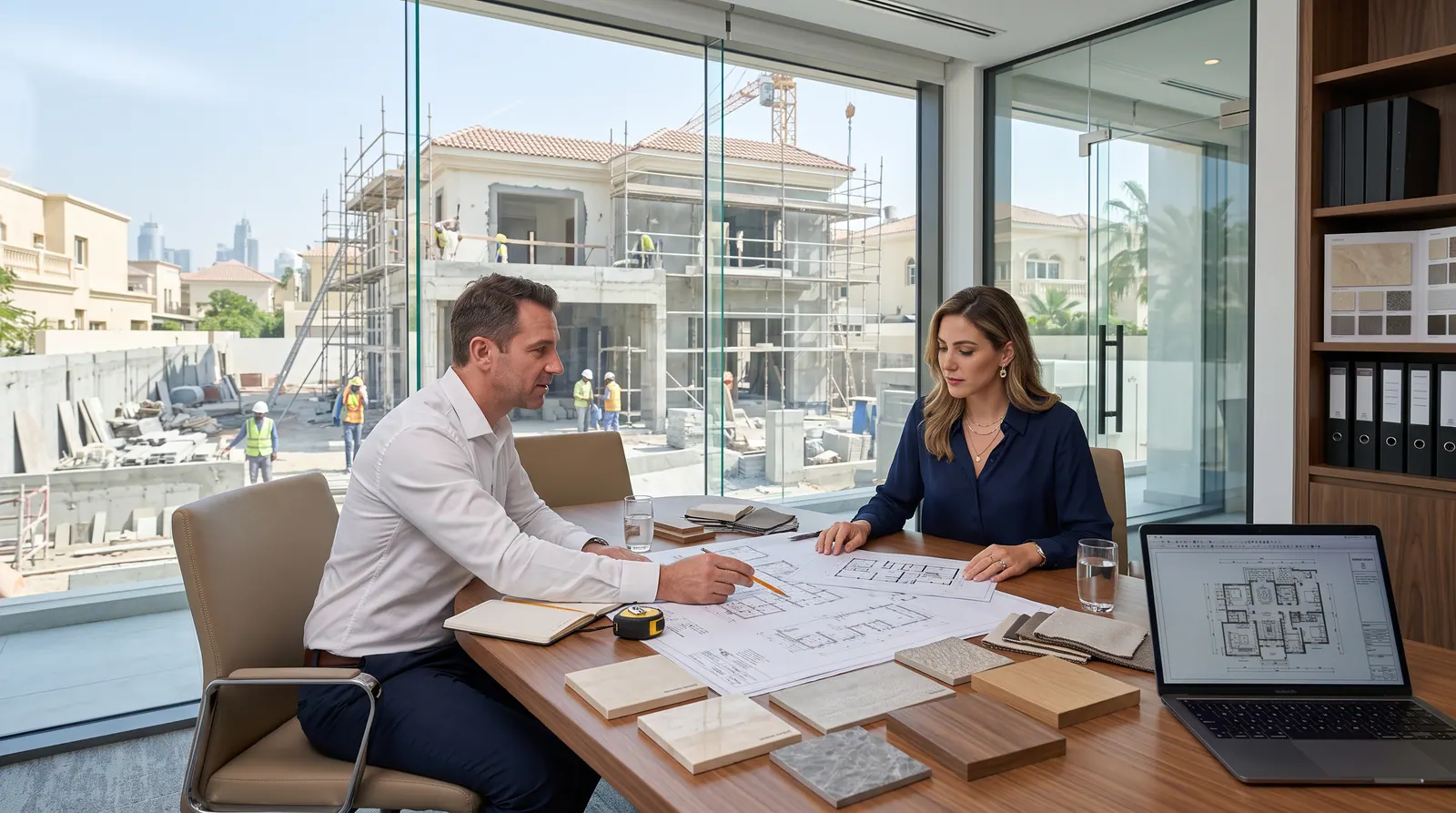
Survey the existing villa and identify obvious structural and MEP issues.
Agree the architectural layout before asking for a final price.
Prepare structural and MEP information where the project requires it.
Develop a detailed scope or BOQ.
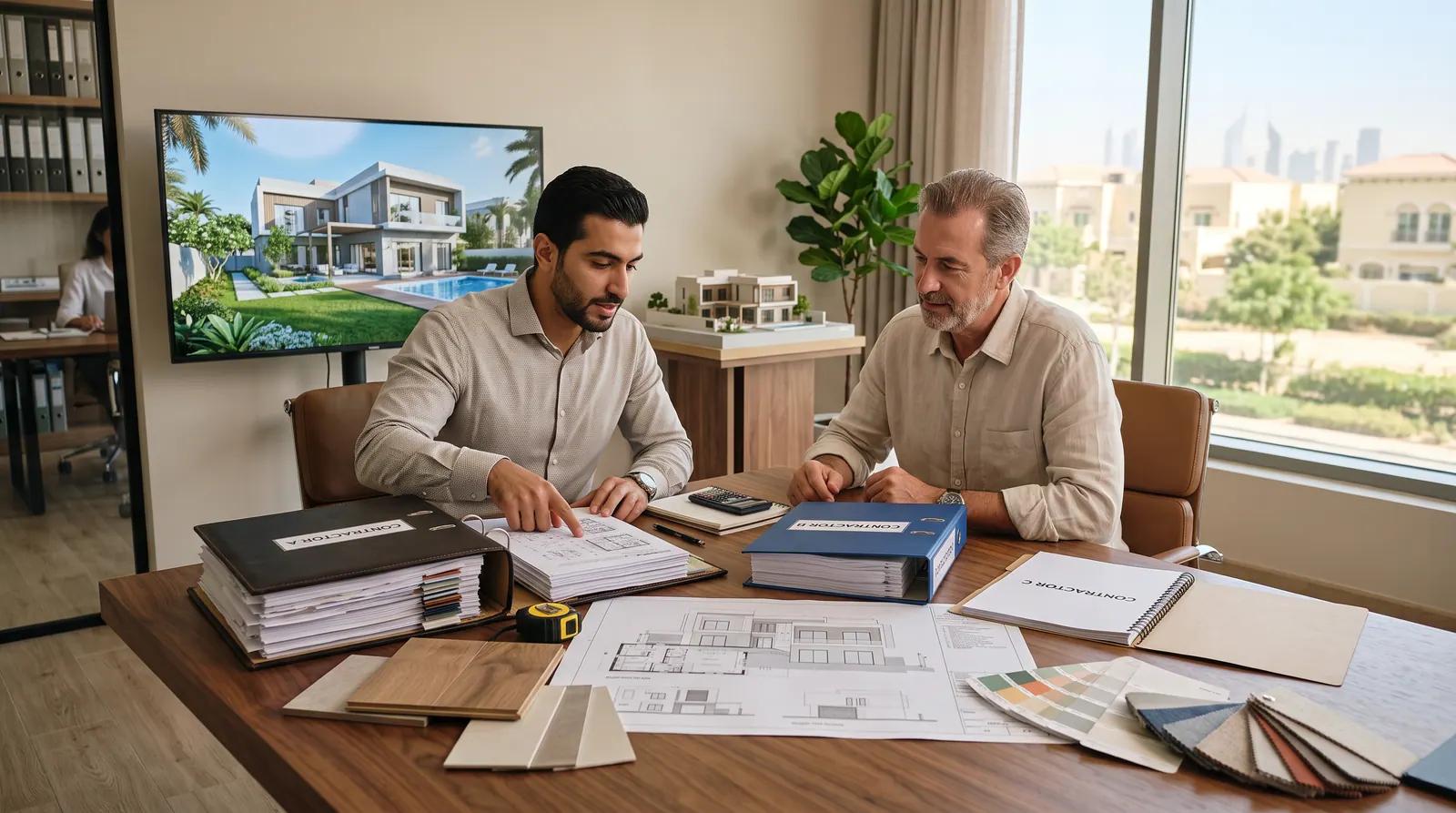
Ask competing contractors to price the same information.
Check exclusions, provisional sums and client-supplied items.
Keep a separate contingency for unforeseen conditions.
The Number That Matters Is the Final Project Cost
A low price per square foot does not necessarily mean a low-cost project. If the quotation excludes major items or relies heavily on provisional allowances, the final amount can be very different from the figure you signed.
At Nathan Engineering, we recommend building the renovation budget around the actual property and agreed scope rather than selecting a design based on a generic rate. Understanding the likely structural, MEP, approval and construction requirements early gives homeowners far better control of the final cost.