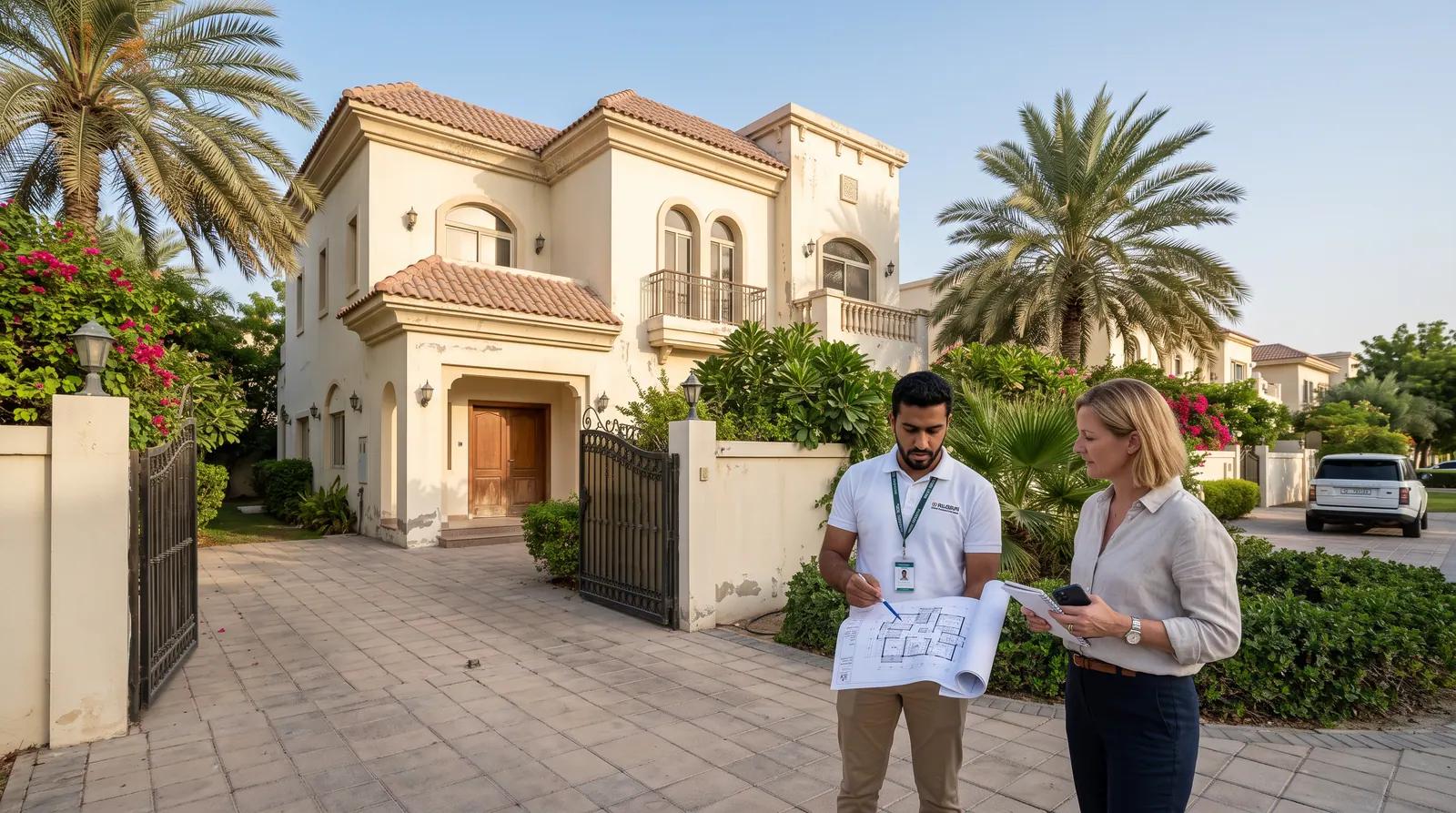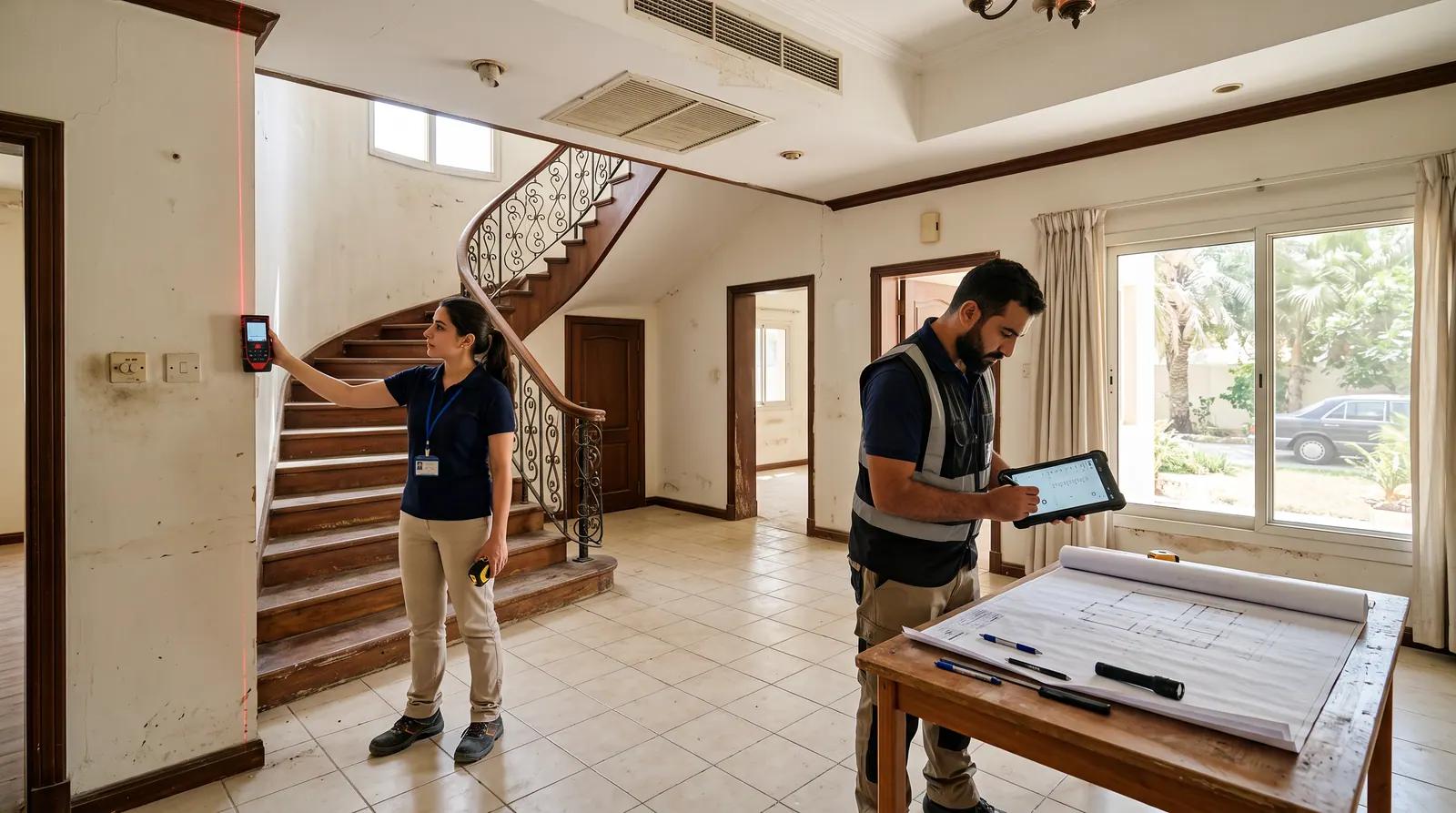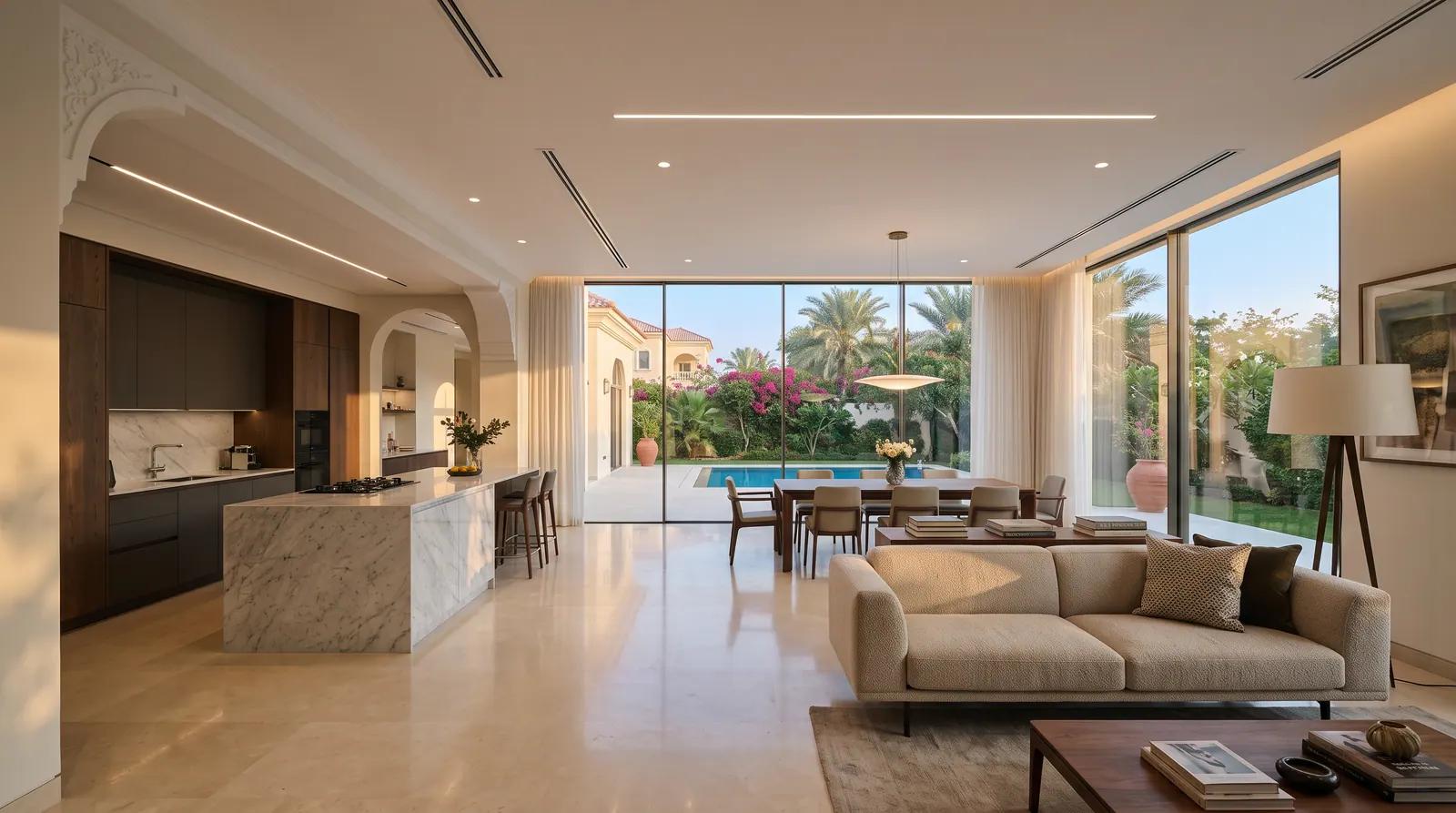
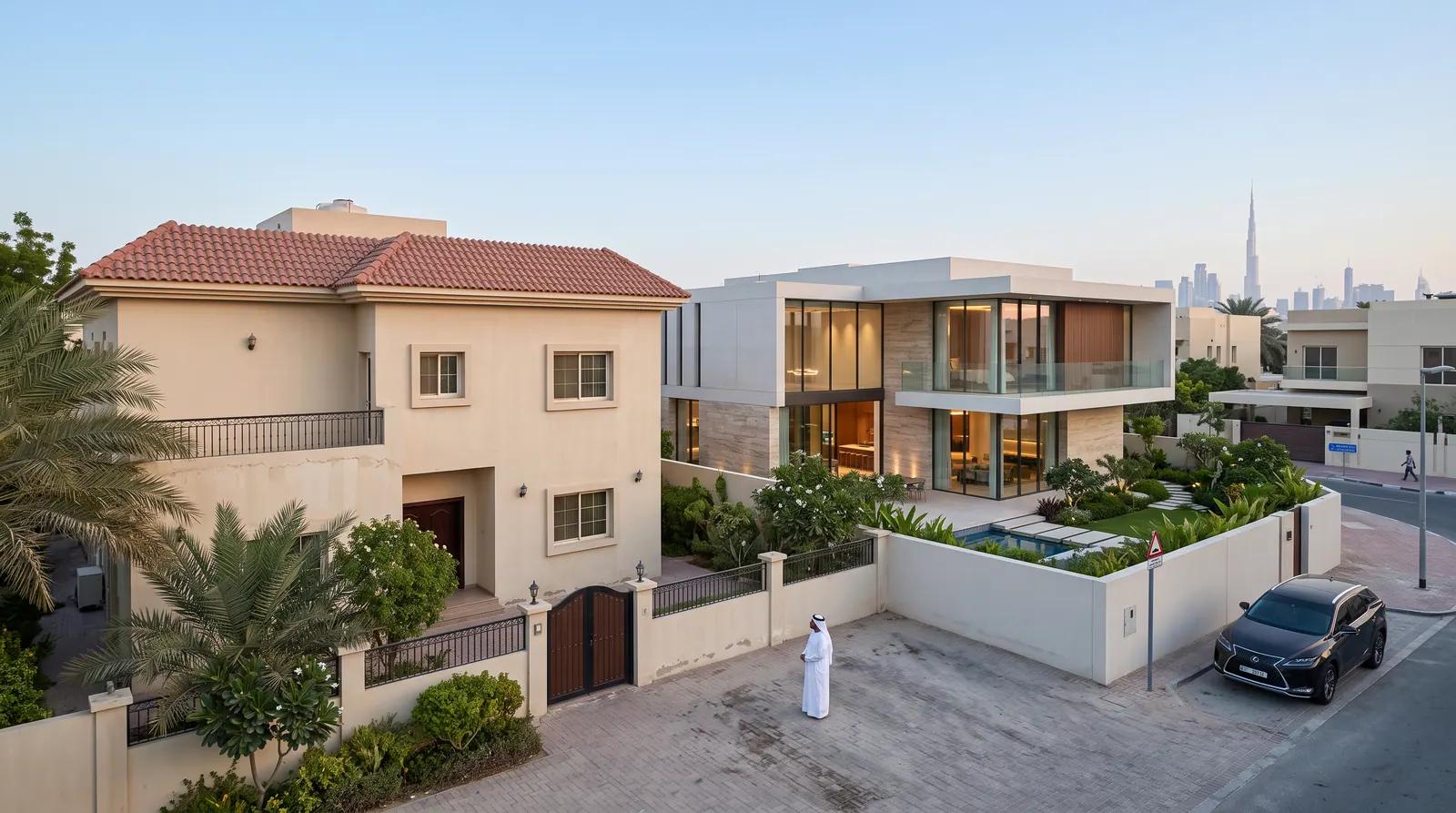
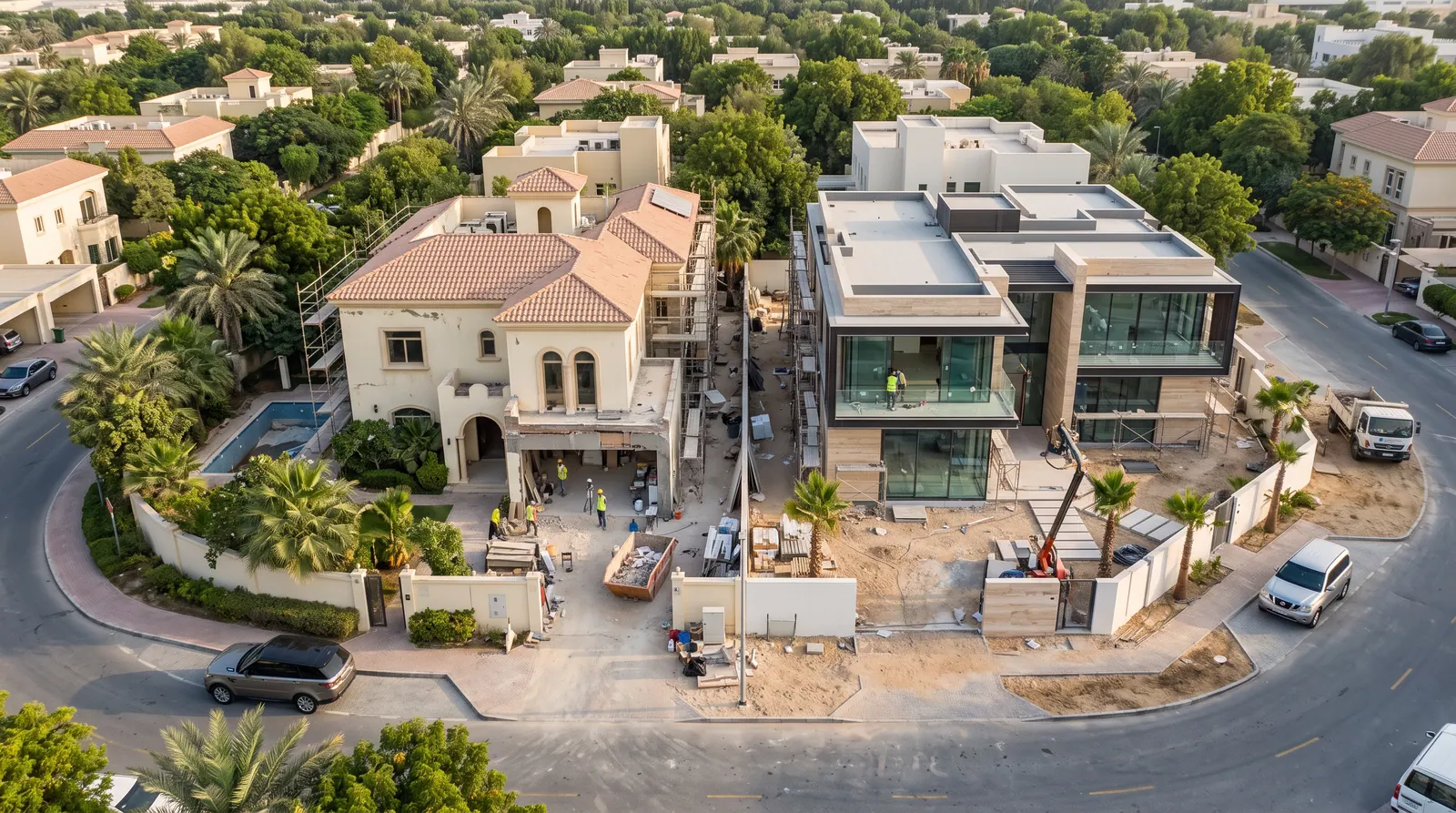
An older villa in Jumeirah, Umm Suqeim, Al Barsha or another established Dubai neighbourhood can offer a great plot and location while the building itself feels outdated. At that point, many owners face the same decision: renovate the existing villa or demolish it and build again?
There is no universal answer. A sound existing structure with a workable footprint can be an excellent base for renovation. A villa with major structural constraints, ageing services and a layout that fights against the new brief may eventually be more efficient to replace.

Start With What You Want the Finished Villa to Become
Do not make the decision based only on the condition of the bathrooms or kitchen. Start by defining the end goal. Do you want a modernised version of the existing house, or a fundamentally different building with new floor levels, larger spans, a different staircase, additional bedrooms and a new relationship with the plot?
The further the new brief moves away from the existing structural grid and building footprint, the more important it becomes to compare renovation against rebuilding.
When Renovation Often Makes Sense
The existing structure is generally sound.
The current footprint is close to the layout you want.
Most structural walls, columns and slabs can remain.
The villa can accommodate the required MEP upgrades.
The desired extension is relatively limited.
The owner wants to retain parts of the existing villa for cost, programme or architectural reasons.
When Rebuilding Deserves Serious Consideration
Major structural deterioration or extensive strengthening is required.
The existing column/grid arrangement prevents the desired layout.
Ceiling heights or floor levels are fundamentally unsuitable.
A very large proportion of the MEP systems must be replaced anyway.
The proposed project changes most of the building footprint and structure.
The owner intends to remain in the property long term and wants a completely bespoke home.
Five Questions an Engineer Should Help Answer
1. Is the Existing Structure Worth Keeping?
A structural assessment should look beyond visible cracking. The engineer may need to review drawings, inspect the structural arrangement and determine whether the existing slabs, beams, columns and foundations can support the proposed changes.
2. How Much of the Existing Villa Would Really Remain?
A project may be called a renovation even when large portions are being demolished and rebuilt. If only a limited part of the original building remains useful, comparing the cost and complexity against a fresh build becomes important.
3. Can the Existing MEP Infrastructure Support the New Home?
Major renovations often increase cooling loads, electrical demand and plumbing requirements. If the building services are already near the end of their useful life, replacement should be included in the decision rather than treated as a later surprise.
4. What Can Be Approved on the Plot?
The Dubai Building Code applies to renovations, modifications, reconstruction and additions to existing buildings. Plot-specific development controls and affection plans can govern items such as setbacks, height and allowable development. A new-build concept and a renovation extension should both be tested against the applicable planning controls before assuming either option is possible.
5. What Is the True Cost Difference?
A renovation quotation and a new-build estimate must be compared on the same basis. Include demolition, temporary works, structural strengthening, full MEP scope, approvals, external works, consultant fees, contingency and the value of anything being retained.
Renovation Can Be Faster - But Not Always
If the existing villa is suitable and the scope is controlled, renovation can avoid some of the time and cost associated with complete demolition and reconstruction. But a highly complex renovation can also become slow because new work must constantly adapt to existing conditions.
Rebuilding provides a clean design starting point, but it comes with a different permit, demolition, design and construction process. The better choice depends on the property and brief, not a general rule.
A Useful Decision Test
Ask: if you removed all finishes from the villa today, would the remaining structure still be a good starting point for the home you want? If the answer is yes, renovation may have strong value. If the answer is no, rebuilding deserves a proper feasibility comparison.
Do a Feasibility Study Before Committing
The decision is easiest to make before spending heavily on detailed interior design. A feasibility study can compare the existing villa against the proposed programme, structural changes, MEP requirements, approvals, likely cost and programme.

Choose the Strategy That Fits the Property

An old villa is not automatically a bad villa. Many properties have strong structures, generous plots and layouts that can be transformed successfully. Equally, there are cases where trying to preserve too much of the existing building creates unnecessary compromise.
At Nathan Engineering, we approach this decision as an engineering and design question first. Understanding what can be retained, what must change and what the plot allows gives the owner a clearer basis for deciding whether to renovate or rebuild.